
Doctoral Candidates

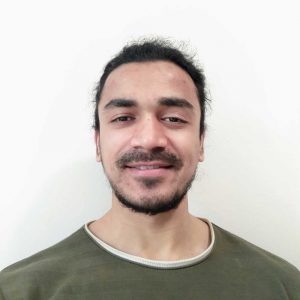
Udit’s professional background in engineering specializes in aerospace and automotive design. He earned his bachelor’s degree in automotive design engineering from the University of Petroleum and Energy Studies, in India, and then he gained experience in the industry by working on hybrid powertrains and suspension systems. He pursued his master’s degree in aerospace engineering at the University of Bologna, presenting the thesis “Turbulent plane Couette flow at low Reynolds number using OpenFOAM”. Since June 2024, he has been pursuing his PhD at KTH Royal Institute of Technology.
Project Title: Consistent wall treatment for non-Newtonian flows via deep reinforcement learning
Objectives: To develop an approach for off-wall boundary conditions for non-Newtonian fluids, based on deep reinforcement learning
eeeeeeeeeeeeeeeeeeeeeeeeeeeeeeeeeeeUdit Sharma | LinkedIn
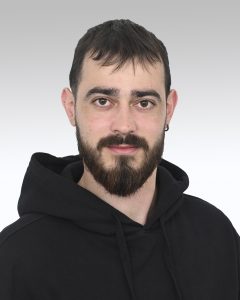
Othonas earned his Integrated Master’s degree in Mechanical Engineering from the National Technical University of Athens, completing his studies in 2025. His academic interests include Computational Fluid Dynamics (CFD), applied optimization techniques in engineering and fluid mechanics, and C/C++ programming. In his diploma thesis, titled “ Contribution to constraint handling in CFD topology and shape optimization “, he implemented an optimizer based on an augmented Sequential Quadratic Programming (SQP) method to solve topology and shape optimization problems, with a focus on constraint-handling techniques. Since April 2025, Othonas has been pursuing his PhD at Otto von Guericke University Magdeburg.
Project Title: Acoustic PFC droplet vaporisation simulation in blood vessels and NN optimisation of droplet dose for BBB opening
Objective: To develop an ML-CFD methodology for acoustic droplet vaporisation in brain blood vessels
eeeeeeeeeeeeeeeeeeeeeeeeeeeesOthonas Valeras | LinkedIn
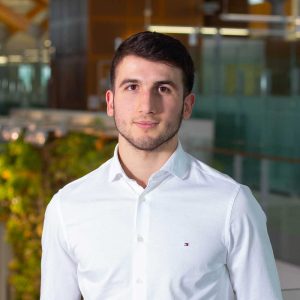
Giovanni earned his bachelor’s degree in automotive engineering from Politecnico di Torino. He holds a master’s degree from University of Windsor (Canada) and Politecnico di Torino, as he participated in a double degree program in automotive engineering. During the time he was in Windsor, Canada, he also carried out an Internship with Stellantis North America on ‘Electric Motor Efficiency Virtual Methodology Development’. The target of the research activity and the one-year experience with Stellantis was the electromagnetic simulation and efficiency assessment of an electric motor currently employed in a commercial vehicle of the company. He completed his studies in October 2023, cum laude.
Since January 2024, he has been working as a software development engineer at “AVL List GmbH” in Austria, pursuing his PhD at Otto von Guericke University Magdeburg.
Project Title: “CNN-enhanced turbulent multi-fluid heat transfer in electrical devices”
Objectives: (1) Develop databases for flow/temperature distribution on a model representing the temperature sensor cooling experiment (2) Train a DNN ML model using the database containing at least 500 samples (3) Simulate the thermal management on a complete industrial oil-cooled E-motor.
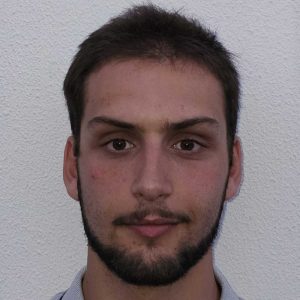
Hugo earned his master’s degree in mechanical engineering from Instituto Superior Técnico (IST), Portugal, in 2022. He worked as a research fellow under the EuroCC Fellows Programme, where he studied the multifractal characteristics of turbulent flows for his master’s thesis, “Universality of the Multifractal Characteristics of Turbulent Flows”. He also worked as a software developer for the startup Silas InsurTech for eight months, where he was involved in software architecture and backend development. Since September 2024, Hugo has been pursuing his PhD at Otto von Guericke University Magdeburg.
Project title: AI accelerated simulations of particle agglomeration and de-agglomeration in inhaling drug delivery
Objectives: (1) To develop an ML model predicting agglomeration and de-agglomeration of particles in turbulent flow and simulate the flow behaviour in dry powder inhalers.
eeeeeeeeeeeeeeeeeeeeeeeeeeeeeeeeeeeHugo Duarte Bernardino | LinkedIn
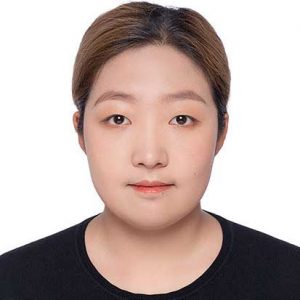
Jiayang earned a Bachelor of Arts and a Master of Engineering degree from the University of Cambridge in 2022. Her master’s thesis topic is: “Non-axisymmetric Endwall Features for Future Engine Fans.” From August 2022 to March 2024, she worked as a researcher at the AI for Science Institute in Beijing, participating in projects regarding the simulation of reactive flow, real fluids, DNNs, and high-performance computing. Since May 2024, she has been pursuing her PhD at Technical University of Munich.
Project Title: Multi-fidelity bubble cloud collapses for medical ultrasound-induced tissue treatment
Objectives: (1) Extension of an open source AD-CFD platform JAX-Fluids for simulation of collapsing clusters of resolved vapour bubbles in a liquid including shock formation and propagation by including an CSF approach for considering surface tension. (2) Application of a multi-fidelity Gaussian process for data fusion of both fidelity levels and demonstration of the potential to significantly reduce computational costs
without noticeable reduction in pre diction without noticeable reduction in prediction quality.
———————————————————————————–Jiayang Xu/TUM | LinkedIn
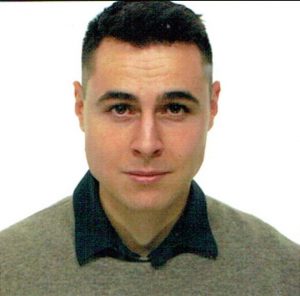
Fabio earned his bachelor’s degree in Aerospace Engineering and his master’s degree in Aeronautical Engineering from Politecnico di Milano, completing his studies in the year 2023. In his master’s thesis “Boundary dihedral angle criterion for finite volume decomposition in immersed boundary methods” he created a dedicated code for the finite volume decomposition of simplex cells intersected by the surfaces of immersed bodies. This contribution aimed to advance mesh generation techniques, particularly in addressing the intricate representation of complex geometries within computational simulations. As a CFD programmer he focuses mainly on Finite Volume Methods FVM and particularly on the open source CFD platform and C++ library of OpenFOAM. He also relies on a solid background in Finite Element Methods (FEM) and proficiency in Python, with expertise in finite element analysis, NumPy and Matplotlib libraries together with studies on applied Direct Simulation Monte Carlo (DSMC) methods and conducted related analyses using tools such as the SPARTA DSMC Simulator. Since March 2024, Fabio has been pursuing his PhD at National Technical
without noticeable reduction in pre diction University of Athens.
Project Title: Adjoint Multiphase Shape Optimisation tool with an ML-accelerated Real-Fluid EoS- Applications.
Objectives: To develop and assess (e.g. in the design of regenerative cooling channels) a continuous adjoint method in OpenFoam for multiphase flows, involving an ML as an EoS-surrogate.
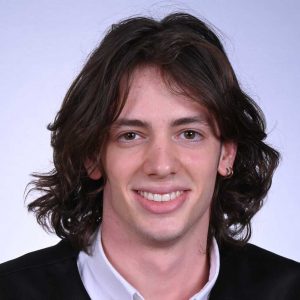
Joel studied aerospace engineering at Technical University of Catalonia (UPC), Spain. Upon completing his bachelor thesis, titled “Analysis and design of a Scramjet engine”, he collaborated with the Fluid Mechanics department at UPC to further study hypersonic flow. He pursued a dual master’s degree in aerospace engineering at UPC and at Cranfield University with a major in aerospace propulsion. His master’s thesis, titled “Optimising PIV testing and inlet flow distortion modelling with efficient image processing and ML techniques”, was completed in collaboration with the Rolls-Royce UTC at Cranfield University. Since September 2024, Joel has been working as an early-stage researcher pursuing his PhD at Delft University of Technology.
Project title: ML-enhanced monolithic LES modelling of thermodynamics-turbulence interactions in dual-fuel combustion.
Objectives: (1) To develop a data-driven SGS models for thermodynamics-turbulence interactions at high-pressure and apply to DFICEs.
Letian Jiang earned his bachelor’s degree in 2022 from Northwestern Polytechnical University in China. His thesis focused on using Model Predictive Control (MPC) to control drone trajectories in convective flow fields. In 2024 he completed his master’s degree at Tu Delft, Netherlands. And during this time, he transferred his research interests on machine learning method with CFD. In his master thesis, he used the Bayesian neural network to get the uncertainty of RANS turbulence modelling. During his internship in TNO (Netherlands Organization for Applied Scientific Research), he developed the software for the reservoir modelling. He is pursuing his PhD at Technische Universität München.
Project Title: ML-optimized LES approach for cavitation erosion prediction in hydraulic machinery
Objectives: (1) To extend the CFD solver JAX-Fluids to simulate compressible cavitating fluid flows by implementing an LES formulation (2) To apply the ML method to optimize the WENO-scheme and further develop more ML-based numerical scheme.
———————————————————————————–Letian Jiang | LinkedIn
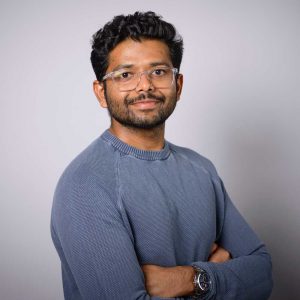
Sankalp earned his bachelor’s degree in mechanical engineering from Indira Gandhi Institute of Technology, Sarang, India. He earned his master’s degree in computational Modelling and Simulation from Dresden University of Technology, Germany, focusing on fluid dynamics and deep learning. The title of his master’s thesis is ‘Surrogate modelling for fluid flow problems and application on cleaning models.’ Since March 2024, Sankalp has been pursuing his PhD at Delft University of Technology.
Project title: Deep learning in Propeller Design Optimization
Objectives: 1. To develop a surrogate model based on Graph U-Net for propeller blade cavitation predictions 2. To apply the surrogate model to optimize propeller blade for reduced underwater radiated noise.
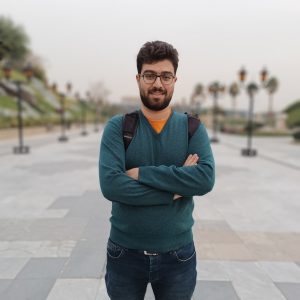
Javad earned his Bachelor’s degree in Chemical Engineering from Shiraz University and his Master’s degree in Chemical Engineering (Modelling, Simulation, and Control) from Sharif University of Technology, completing his studies in early 2024. His Master’s thesis, titled ” Identification of Surrogate Models for Hybrid Distributed Parameter Systems Using Machine Learning Algorithms “, focused on developing and evaluating machine learning methods for efficient modelling and simulation, with an emphasis on reducing computational complexity in Computational Fluid Dynamics (CFD). He has expertise in surrogate modelling, CFD, and advanced control strategies, with a focus on applying machine learning and deep learning algorithms.
Since March 2025, Javad has been pursuing his PhD at the National Technical University of Athens.
Project Title: ML Enhanced Analysis and Adjoint-Based Optimization Tools for Cavitating Flows in Hydraulic Turbines
Objectives: (1) Development of physics-informed neural networks (PINNs) and numerics-informed neural networks (NINNs) tailored for efficient and accurate simulation of cavitating flows within hydraulic turbomachines. (2) Integration of differentiated deep neural networks into adjoint-based optimization processes to significantly reduce computational costs while maintaining high predictive accuracy, particularly through uncertainty quantification and robust optimization approaches.
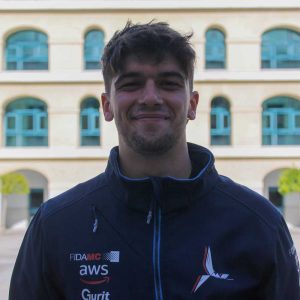
Miguel earned both his bachelor’s and master’s degrees in aerospace engineering from Universidad Carlos III de Madrid. During his studies, he participated in the local Formula Student Team as an aerodynamicist and head of aerodynamics, developing aerodynamic packages. For his bachelor’s thesis he developed a fluid-structure coupler for low Reynolds number aerodynamics, and for his master’s thesis he performed a validation of the Formula Student team’s CFD code against a PIV at the Spanish Institute of Aerospace Technology (INTA). He also worked at Airbus Space and Defence as an aerodynamicist before joining City St George’s, University of London as an Early-Stage Researcher and PhD student in September 2024.
Project title: Physics-informed NN closures for RANS/LES simulations of out of equilibrium non-isothermal flow
Objectives: To develop a DNN closure ML model for ZPG and APG boundary layers with heated walls
eeeeeeeeeeeeeeeeeeeeeeeeeeeeeeeeeeeMiguel Perez Cuadrado | LinkedIn
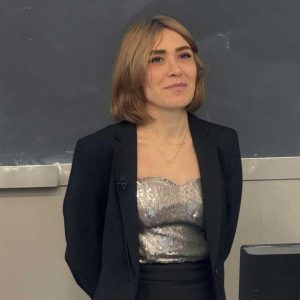
Elnaz earned her bachelor’s degree in civil engineering from the University of Tabriz, Iran, and her first master’s degree in environmental engineering from Khajeh Nasir Toosi University, Tehran, Iran. Her master’s thesis focused on optimizing the Photo-Fenton process for landfill leachate treatment. In December 2023, she completed a second master’s degree in civil engineering from Alma Mater Studiorum – Università di Bologna, where she conducted research on CFD for the optimization of design parameters in open channels. Since March 2024, Elnaz has been pursuing her PhD at City St George’s, University of London.
Project Title: HIFU-induced compressible multi-material interactions for encapsulated microbubble drug delivery
Objectives: (1) To investigate real-gas effects in bubble collapse using disequilibrium multiphase modelling, (2) To analyse tissue heating and phase changes caused by ultrasound energy, (3) To develop machine learning
without noticeable reduction in pre diction models for predicting and simulating bubble-tissue interactions.
eeeeeeeeeeeeeeeeeeeeeeeeeeeeeeeeeeeElnaz Ghafari | LinkedIn